Friday, June 30, 2017

Top 5 Ways For Women To Take Control Of Poker

Take Control Of Poker

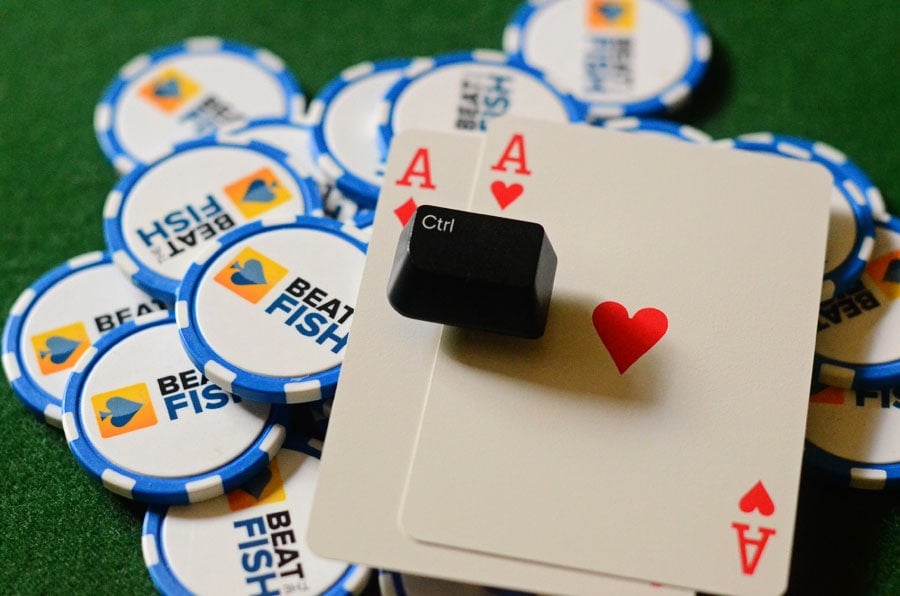
Since card games became popular in modern times, poker has been known as a man’s game. Whether played in saloons or back rooms, men’s gatherings or casinos, women have been a rarity at the tables. For many years, they were made to feel uncomfortable or unwelcome in poker games, and that atmosphere remains in many situations today. While more staff and players have begun to encourage women to play in greater numbers, they remain a glaring minority.

As more people become aware of the frequent sexism displayed at poker tables, there is more of a concerted effort to overcome those antiquated attitudes and present a more welcoming environment. And while men do have a responsibility to stand up against sexism in the game and change the ways in which women have been traditionally treated, women can take charge of many situations as well. Women know that it can be a long and frustrating process to wait for others to do what they can do better.

Therefore, there are several key ways that women can promote change and take control of their own poker experiences.

Take a Stand

Women must begin reporting sexist and harassing behavior in poker situations. There are light-hearted ways to approach various situations by asking offenders to stand down and act more maturely, at the same time enlisting the help of others at the table to support your stance. Should that prove unsuccessful, however, immediately verbalize concerns to the dealer. A lack of a proper handling of a scenario by the dealer can then be taken higher, first to the poker room manager and on to other executives at the casino if necessary. Make sure to insist on being treated with respect and class, and let other players know that this is not an unreasonable request.

Bring Friends

A message is always better heard when delivered in greater numbers. Bring friends – male or female – to the poker room or tournament. Even if playing at different tables, having backup in any effort to stand up against sexism and disrespectful behavior is a powerful way to affect change. One person can be dismissed by the offender, even by management, but a group of people is more difficult to ignore. In the end, it also helps to know that the support is there, even if it is unnecessary.

Use Social Media

When a woman finds sexist behavior to which the perpetrator is unwilling to admit or change, the first step should always be to take complaints to the management of the poker room, casino, or tournament series. But in lieu of a proper response, use social media to call out that behavior and generate support. Social media is a powerful tool, especially for egregious offenses that should be handled by management. Bringing attention to a situation on Twitter, Facebook, or Instagram can turn into a rallying cry for change that will put the management in a position to take a stand for fear of losing business.

Possess Information

Sometimes, people who are confronted with offensive or harassing behavior try to make excuses or dismiss complaints, putting the onus on the victim as a troublemaker. Meanwhile, many other players will hesitate to take a stand or get involved. This is when facts come in very handy. When a woman is able to cite statistics or facts about sexual harassment or sexist behavior, it often takes the offender by surprise and shuts down any attempts to debate the issue. Even better, if it is possible to research specific cases pertaining to gaming, gambling, or the specific casino regarding past instances of women overcoming harassment, that type of information can be very influential.

Teach Other Women to Play

One of the best ways to close the gender gap in poker and create a more equal playing field is to personally participate in bringing more women to the tables. By starting a home game, introducing friends to free-play online poker, or convincing another woman to take a seat in a live cash game for a short time, they will see what an intellectually challenging and stimulating game it can be. Women are no strangers to casinos, bingo games, and other forms of gambling, so pulling them toward poker will not only be good for the game but likely for that woman’s bank account as well.

Everyone needs to play a part in making poker a friendlier and more comfortable place for women. Take those first steps and encourage others to follow. Every step in the right direction is a positive one.

Sunday, June 25, 2017

To Reveal Research Topics, Play This Card Game


"Why not low tech?” asked Tiffany Baglier, education librarian at the University of Florida in Gainesville. She was speaking about gaming and library instruction at the American Library Association’s (ALA) Annual Conference and Exhibition June 25. “When we think of gaming,” she continued, “we automatically think of video games, but those involve extensive time and resources.”

Instead, Baglier and her colleague, associate university librarian Michelle Leonard, have developed a simple card game called Keywords to Mastery to help their students connect the right keywords to topics and find appropriate library resources.

This interactive session, sponsored by ALA’s Games and Gaming Round Table, introduced Keywords to Mastery to attendees, who were broken up into groups of six to play. The game involves 45 assignment cards and 230 keyword cards.

Moving in clockwise order, one player draws an assignment card that states a research question or topic as well as one or more keyword blanks. The remaining players are each dealt five keyword cards and asked to play the card they consider most appropriate to the assignment card. Players draw the number of keyword cards played (they should always have five cards each). The “assignment sharer” reads the keyword cards played and chooses a winner, who receives a point. The player with the most points after 12 rounds wins.

The hands-on activity created collaborative conversation among group members, and the game’s value of promoting critical thinking quickly became obvious. The assignment sharer’s winning choice can be challenged, generating a scholarly discussion on what that specific keyword infers in the given context of the research assignment.

Baglier and Leonard then challenged each group to create their own mini mastery game by coming up with a few research topics and keywords. The presenters concluded the session by allowing each group to play a different group’s mini game.

Wednesday, June 21, 2017

Fable Fortune is a very fun card game chained to a very dead franchise


I remember a surprising amount about the plot to Fable III, considering that I stopped actively thinking about it once the credits rolled some seven-odd years ago. I remember you were a prince, and your brother was the king, but he was a mean king. You had to put together a scrappy gang and overthrow your evil brother, only it turns out he was being a despotic ruler because he needed to save money to defend Albion from some generic evil threat. I think the morally ambiguous guy from the last game showed up. Then you leave your Xbox on for like three days while money just kind of accumulates.

That summary was what I rattled off to the developers of Fable Fortune when they asked me if I've ever played a Fable game. It's a fair question! Anecdotally, people don't care about Fable – in part because the studio behind the series was closed last year and Microsoft cancelled that free-to-play co-op game. Fable isn't being scrubbed from the public consciousness because of any active disinterest, it's just that pop culture only has so much room for middling role-playing franchises. When I ask people about Fable, all they ever remember is "chicken chaser" in a bad Cockney accent.

So I'm not the only one who finds Fable Fortune – a Kickstarted card game featuring Fable characters and iconongraphy – extremely curious. The collectible card game (CCG) space is well-tread in video games, with Hearthstone tearing it up on just about every platform. You could make a play for that genre by stapling your game to an established franchise, like The Witcher and Gwent, which Fable Fortune is almost certainly trying to do. As a game, Fortune is nothing to sneeze at, borrowing from Hearthstone by keeping things simple while still making each deck fun to play. But that Fable name might end up being more of an albatross than anything else – at best it might evoke a franchise players forgot because it was too uneven to remember.


I remember a surprising amount about the plot to Fable III, considering that I stopped actively thinking about it once the credits rolled some seven-odd years ago. I remember you were a prince, and your brother was the king, but he was a mean king. You had to put together a scrappy gang and overthrow your evil brother, only it turns out he was being a despotic ruler because he needed to save money to defend Albion from some generic evil threat. I think the morally ambiguous guy from the last game showed up. Then you leave your Xbox on for like three days while money just kind of accumulates.

That summary was what I rattled off to the developers of Fable Fortune when they asked me if I've ever played a Fable game. It's a fair question! Anecdotally, people don't care about Fable – in part because the studio behind the series was closed last year and Microsoft cancelled that free-to-play co-op game. Fable isn't being scrubbed from the public consciousness because of any active disinterest, it's just that pop culture only has so much room for middling role-playing franchises. When I ask people about Fable, all they ever remember is "chicken chaser" in a bad Cockney accent.

So I'm not the only one who finds Fable Fortune – a Kickstarted card game featuring Fable characters and iconongraphy – extremely curious. The collectible card game (CCG) space is well-tread in video games, with Hearthstone tearing it up on just about every platform. You could make a play for that genre by stapling your game to an established franchise, like The Witcher and Gwent, which Fable Fortune is almost certainly trying to do. As a game, Fortune is nothing to sneeze at, borrowing from Hearthstone by keeping things simple while still making each deck fun to play. But that Fable name might end up being more of an albatross than anything else – at best it might evoke a franchise players forgot because it was too uneven to remember.

Tuesday, June 20, 2017

Card Game Unlock! Is Like a Portable Escape Room


Unlock! Is a new series of card-based puzzle games from Asmodee and Space Cowboys that tries to port the concept of an escape room into a boardgame, using a free app that gives the players 60 minutes to solve the clues in the cards and win the game before time runs out. The general structure works well, and the stories are all tightly written, but some of the critical clues are so abstruse that I think the puzzles would be too difficult to solve without using the Hints function in the app. There are currently three scenarios available plus a downloadable fourth module, The Elite, available on the official Unlock! site; for this review, we played The Elite plus two of the three scenarios for sale, The Formula and Squeek & Sausage.

Each Unlock! box is its own self-contained puzzle, comprising a unique deck of cards that players will turn over as they solve riddles or discover new clues, with the eventual goal of finding four-digit codes that advance them in the game or finish the entire module. Players enter those codes into the app and will either get an instruction to reveal another numbered card or will get a loud buzzer for entering an incorrect code and lose three minutes off the timer. Some cards represent rooms and direct players to turn over a handful of additional cards. Some cards represent partial clues that can only be combined with other cards of specific colors—red cards with blue cards, exclusively, and only if you can add their card numbers to get a sum of 99 or less, which sends you to another card in the deck. Some cards are “machines” that ask you to figure out a visual or logical puzzle, add up certain figures on the card, and then treat the result as a red card with the sum as its value, which you then get to combine with the value on a blue card to get to yet another card in the deck.

The puzzles are mostly linear—there is one solution to each, meaning you can’t go around any clue you can’t solve, and by and large have to hit the clues in order. If you get to a clue that stumps you, you have two options (other than just continuing to work on it as the timer counts down): you can enter the card number into the app’s Hint feature to get a sentence or two to get you unstuck, or you can pause the damn timer and take as much time as you need. I suppose the latter is cheating, but once the timer hits 0:00, your phone doesn’t self-destruct, and the app still functions to allow you to solve the game without scoring points for it. Since it’s a co-op game, though, I don’t see how the points matter; because you can only play each module once, it’s not like you can try to beat a previous score.


Unlock! has two flaws, one minor and one major. The minor one is an error of accessibility. Many cards in the game have “hidden objects,” card numbers that players have to work to find on other cards, often printed in tiny text, or in a color very similar to the background, or in a strange font. Once we figured out that looking for those numbers was essential—you can’t solve any of the cases without them—we found most of them in a minute or two, but doing so requires good eyesight; my wife, the only member of my immediate family who wears glasses, didn’t see any of them. Adding an accessibility mode to the app or designing the numbers so that they don’t blend so well into the cards’ backgrounds would help make the game better for all players.

The major flaw, however, is how obscure some of the clues are, a function of game writing that isn’t self-contained. Difficulty is in the eye—or brain—of the beholder, but each of the three modules we played had at least one clue that I thought was too difficult, and in all cases it was a clue that required knowledge or recognition of something from outside of the game itself. Solving “Squeek & Sausage,” the goofiest and most fun of the three we’ve tried, requires players to recognize a pattern that has nothing to do with the remainder of the puzzle, something from the real world that feels non sequitur-ish, and even after we got the Hint from the app still didn’t seem like a good enough representation. (If you get to that clue and are stuck, but don’t want the Hint to give the whole clue away, here’s my half-hint: Look at the pattern of spaces under the microwave. I only know of one common numeric code that goes 1-6-6-1 the way those spaces do.)

Unlock! says it’s for players aged 10 and up, and my daughter, now 11, enjoyed playing along but was at a disadvantage in the logical aspects of the game—she figured out several of the clues herself before we did, but was frustrated by the seemingly random decisions of what extra-game factors she could consider and what factors she couldn’t. We also would have needed more than the hour given for these modules had we eschewed the hint function, so either you accept you’re going to need some hints or you budget about 90 minutes per module. I think the core structure here is bang on for a puzzle game, but the puzzle masters have to hone their writing to make the games challenging without relying on players recognizing patterns or symbols that have nothing to do with the rest of those modules.

Friday, June 2, 2017

Game Day: Missile Cards


Missile Cards, which originally debuted on Steam, combines so many of my favorite game elements - a strategy-based mashup of genres, retro graphics, and a fun chiptune soundtrack - that I knew I had to try it. My only hesitation was that it’s a mashup of a Missile Command-style arcade shooter with a card game, which isn’t one of my favorite genres. My reluctance disappeared the minute I began playing though. Missile Cards is a fantastically fun game that’s incredibly hard to put down.

The screen is split into two parts. On the left are your bases that you must defend from comets and nukes. On the right, is the card playing area. Cards appear from left to right on a conveyor belt. There are three types of cards: hazards, defenses, and utilities. When a hazard card reaches the end of the conveyor belt, it appears on the left-hand side of the screen. Missile Cards is turn-based so with each turn, the hazard creeps a little closer to destroying your bases.

To defend yourself, you move defense cards from the conveyor to one of the four card holding spots. The defenses cost Action Points, so you need to keep an eye on whether you have sufficient points to purchase defenses. Defenses also need to be charged to work, so there’s advanced planning required to make sure your weapons are available when you need them.

Utility cards like batteries can be used to charge up defenses faster. Defenses and hazards also have numbers associated with them that show what it takes to defeat hazards. For example, a level 4 comet can be blown up with a level 4 missile or two level 2 lasers. Defenses are deployed against the closest hazards first, so it’s also important to keep defenses of varying power levels available, so you don’t waste a level 4 missile on a level 1 comet, for instance.

There are two types of bases. If your main base takes a hit, you’re finished. The sub-bases that flank your primary base can take one hit before the game ends though. As a result, it’s sometimes a wise strategic move to sacrifice a sub-base to protect your main base.


That’s a lot to consider when devising a strategy as you play, but there’s even more. You can also skip turns, which costs an Action Point and discard cards, both of which add to the games complexity.

The one thing that is a little frustrating about Missile Cards at times is the randomness. Draw a bad hand, and no matter how strategically you play your cards, you’ll lose. On the other hand, that’s the nature of card games with randomly drawn decks, so I can’t get too upset about it. The randomness also works from the perspective of enticing you to play another round because you’ll want to see if you can draw a better set of cards.

Because Missile Cards is turn-based, you don’t have the stressful dynamic of a game like Missile Command. You can play with the simple goal of defending your bases or try to get a high score and XP points that you can trade in for different defenses. The multiple goals add layers to the gameplay that keep Missile Cards from getting boring after multiple plays.

Developer Nathan Meunier has done a terrific job mashing up genres that I would never have imagined would fit together in a way that not only works but is also one of my favorite games of 2017 so far.

Thursday, May 25, 2017

Go Fish Card Game Rules


Youngsters cherish playing Go Fish Card Game. It is prevalently known as Fish Game. One can play this amusement in a gathering of two to six players and so as to play this diversion one needs a card deck with fundamental fifty two cards. The intention of the players in this diversion is to gather greatest arrangements of four keeping in mind the end goal to win this sweet and basic amusement. Give us a chance to take a gander at some regular Go Fish Card Game Rules:

1. In this specific amusement the significance is given to the card numbers. The suits are not that vital in this amusement when contrasted with the card numbers. According to the card numbers the rank of cards is chosen. It goes from pro to number two et cetera.

2. Keeping in mind the end goal to choose which player will turn into the merchant, each player gets a card with a face up. The player who gets the most reduced card turns into the merchant in this diversion called Go Fish Card Game.

3. When it is chosen what player has the most reduced card and consequently is the merchant, this merchant rearranges the cards. As a piece of Go Fish Card Game Rules, The player sitting on the correct side of the merchant cuts the cards in the wake of rearranging.

4. Post cutting, the merchant begins circulating the cards in clockwise way. Now of time the cards are conveyed with confront down and not confront up. In the event that the amusement is played with a few players then every player gets seven cards. On the off chance that the quantity of players is all the more, at that point if there should arise an occurrence of four or five players, each player gets five cards each. The rest of the cards should be set back as a stock. These outstanding cards are additionally placed in confront down way.

5. Presently, all players expect to make greatest fours of each number like four cards of six, four cards of ten et cetera.

6. Presently the amusement begins with the main player who sits at the left half of the merchant. This player can approach any rival for any rank. For instance this player can approach whatever other player for the lords, rulers, jacks and so on.

7. The other player ought to have no less than one card of the rank asked by the player sitting alongside the merchant. On the off chance that, this player does not have a solitary card of that rank then he should state "Go Fish". This outcome in the player sitting to one side of the merchant or any player who really requested a card to pick one card from the stock.

8. On the off chance that the player gets the card which he requests for, he gets another chance to request another rank card from whatever other player or a similar player. In the event that the player picks the card from the stock, the swing goes to the player sitting to his left side.

9. The victor in this amusement is the individual who gets the most extreme number of sets for four cards of same number.

Wednesday, May 10, 2017

Old Maid is a Simple Card Game


One of the main card recreations I at any point played, and one of the least complex diversions, was Old Maid. (War is presumably more straightforward, however that is another story.)

For the individuals who have never played Old Maid, here are the standards utilizing a locally acquired deck of Old Maid cards. This deck comprises of different sets of coordinating cards and one Old Maid card.

One player rearranges the cards and gives them each one in turn around the hover of players until the point that the greater part of the cards have been managed. It doesn't make a difference if a few players have a greater number of cards than others. Every player takes a gander at his cards and expels any coordinating sets of cards, setting them confront up on the table.

At that point the players alternate playing, starting with the player to one side of the merchant and moving clockwise around the circle. On your turn, take a card, inconspicuous, from the principal player to your correct who has cards left to play. In the event that that card coordinates a card in your grasp, put that combine of cards on the heap of matches. On the off chance that you come up short on cards, you quit alternating. You just watch for whatever is left of the amusement.

Continue playing until the point that the last combine of cards has been coordinated. The player left holding the Old Maid loses the diversion.

You can play Old Maid with a standard deck of playing cards. Simply include a Joker, which replaces the Old Maid.

You can abbreviate the diversion in the event that you expel cards from the deck. A locally acquired Old Maid deck is typically littler than a deck of playing cards. So you could evacuate the 2's, 3's, 4's, and 5's.

You can likewise control the length of the diversion in light of how you coordinate cards. In the event that you coordinate by rank and shading (the Six of Clubs coordinates just the Six of Spades), the amusement is longer. On the off chance that you coordinate by rank alone (the Six of Clubs coordinates either the Six of Spades or the Six of Diamonds or the Six of Hearts), the diversion is shorter. Furthermore, in the event that you coordinate by rank and inverse shading (the Six of Clubs coordinates either the Six of Diamonds or the Six of Hearts), the amusement is an in the middle of length.

You can likewise play without the Joker. You can expel a Queen from the deck so that the unmatched Queen turns into the Old Maid, or you can evacuate a King so that the unmatched King turns into the Old Bachelor. Or, then again you can evacuate some other card. You can even evacuate a card so that the players don't see which card has been expelled.

You can expel particular numerous cards. You can evacuate a King, a Queen, and a Jack.

Or, on the other hand you can evacuate various cards without the players seeing them. For example, evacuate five irregular cards. On the off chance that there are no sets in these cards, there are five Old Maids. On the off chance that there is one sets, there are three Old Maids. In the event that there are two sets, there is only one Old Maid. No one knows which cards are Old Maids or what number of Old Maids there are.

Be that as it may you play, Old Maid is as yet a round of arbitrary determination. You select a card arbitrarily from another player. There is some aptitude required in coordinating cards, however not as much expertise as is utilized as a part of most other card diversions.

So what about an adjustment in the standards? What about playing Old Maid so that on your turn you pass a card to another player?

The new guidelines are as per the following. The cards are managed as in Old Maid. Every player still takes a gander at her cards and evacuates any coordinating sets of cards, putting them confront up on the table. What's more, the players alternate playing, starting with the player to one side of the merchant and moving clockwise around the circle. In any case, before consistent turns start, the merchant picks a card from his hand and places it confront down on the table close to the player to one side.

On your turn, take a gander at the card that was passed to you. On the off chance that that card coordinates a card in your grasp, put that combine of cards confront up on the heap of matches. Something else, put the passed card back face-down on the table. Pick a card from your hand and lay it confront around the main player to one side who has cards left to play. At that point get the card that was passed to you and place it in your grasp.

Whatever is left of the diversion is played quite recently like Old Maid. The player who winds up with the Old Maid loses the amusement. Yet, there is more space for procedure. You can monitor the cards that you passed and the cards that were coordinated. You can utilize that learning to enable you to pick which card to pass.